

The Short Answer
Researchers have identified pathways by which cannabinoids interact with inflammatory processes in the body, largely through CB2 receptors concentrated in immune-system tissues. For adults 21 and older, this is an active area of research rather than a settled clinical consensus. Cannabis is not a substitute for anti-inflammatory medication prescribed by a clinician, and no claim in this article should be read as medical advice.
How the Mechanism Works
Inflammation is a normal immune response to injury or infection. It becomes a problem when chronic. The body's endocannabinoid system (ECS) includes CB2 receptors that are concentrated in immune cells and peripheral tissues; researchers have studied how cannabinoids, particularly CBD, and to a lesser degree THC, interact with these receptors to modulate inflammatory signaling.
The mechanism is not in dispute; the clinical application is still being studied. Research on specific inflammatory conditions (rheumatoid arthritis, inflammatory bowel disease, certain skin conditions) is ongoing, with mixed and heterogeneous results.
What Consumers Describe
Some consumers describe using CBD- or CBD-forward products for general muscle soreness, joint discomfort, or post-exercise recovery. Whether any individual user experiences the specific effect they're seeking depends on factors that research has not fully characterized, dose, product type, individual physiology, and the underlying condition.
For consumers considering cannabis in this context, the prudent approach:
- Talk to your clinician first, especially if you take anti-inflammatory medications or have an autoimmune condition.
- Start with low-THC or CBD-dominant products.
- Track response over weeks, not individual doses.
- Do not discontinue any prescribed medication without clinician guidance.
What This Doesn't Mean
- Cannabis does not cure inflammatory conditions. Research has not established this, and consumer marketing that implies it is making claims beyond the evidence.
- "Natural" does not mean safer or more effective. The same standards for dosing, drug interactions, and responsible use apply.
- CBD is not universally safe. It has documented drug interactions (see cannabis and drug interactions).
Where the Research Is Most and Least Developed
The best-characterized piece of the cannabinoid-inflammation story is at the cellular level. In lab studies, CBD reduces the release of several pro-inflammatory cytokines, and CB2-receptor activation dampens immune-cell signaling. These are mechanistic findings, which is different from clinical proof that taking a CBD product will reduce inflammation in a given person with a given condition.
Human trials are where the evidence thins out. Rheumatoid arthritis, inflammatory bowel disease, psoriasis, and atopic dermatitis have all been studied in small, often short-duration trials. Results are mixed and heterogeneous; trial sizes are often too small to draw firm conclusions; and product formulations (CBD isolate, full-spectrum, THC:CBD ratios, dose, route of administration) vary enough that cross-trial comparisons are difficult.
For inflammation specifically, full-spectrum and CBD-forward products dominate consumer discussion. Some consumers describe benefit from THC-containing products, particularly at night or for pain with an inflammatory component. Whether that's the THC acting on pain perception, the CBD acting on inflammation, or both is hard to tease apart from self-report.
What to Look For at a Dispensary
If you're exploring cannabis in this context, at the shelf:
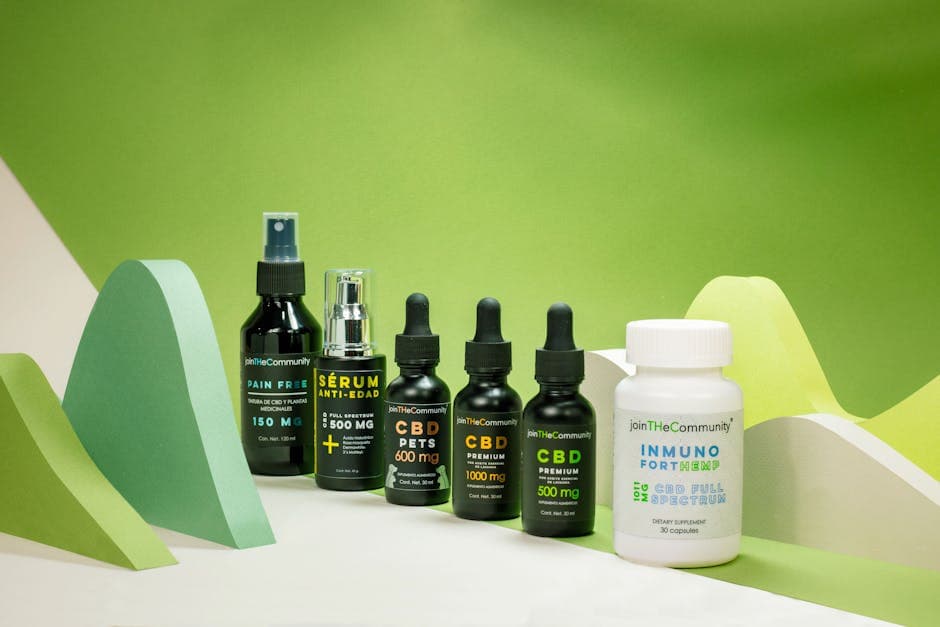
- CBD-dominant products let you start without intoxicating effects. A 1:1 CBD:THC ratio is a common next step if CBD alone isn't producing the response you want.
- Low-dose THC formats (2.5 mg edibles, measured tinctures) are easier to titrate than flower or concentrates.
- Topicals for localized inflammation (joints, muscles) are a different route than systemic products; they can be combined, not substituted.
- Certificate of Analysis. Verify licensed status via the OCM QR code at cannabis.ny.gov. A COA confirms cannabinoid content and absence of pesticides and heavy metals.
Practicalities of Exploring This Safely
Talk to your clinician first, especially if you take anti-inflammatory medications, immunosuppressants, or have an autoimmune diagnosis. Several cannabinoids have documented drug interactions. Start with the lowest effective dose and build slowly over weeks, not days. Track how you feel over time rather than judging off a single dose. And do not discontinue any prescribed medication on your own, including NSAIDs or biologics, in favor of cannabis.
Where to Go Next
Related reading: cannabis for chronic pain, cannabis for arthritis, and what are cannabinoids.
---
*This article is consumer education for adults 21+. Nothing here is medical, legal, or financial advice. Cannabis laws vary by state, always verify your state's current rules and, for health questions, consult a licensed clinician. For regulated New York retail, verify licensing via the OCM QR-code system at cannabis.ny.gov.*
Theo, Editorial Team
Theo covers wellness, effects, and how cannabis fits into specific health and lifestyle goals. Their writing covers medical cannabis programs, sleep and stress, dosing for newer consumers, and the practical patient-facing side of legal markets — from New York's adult-use program to Puerto Rico's medical-only framework.